Three consecutive years of rate hardening in commercial property. Reinsurance treaty costs up materially across CAT-exposed territories. GL rates still moving in most casualty lines, though with regional variation. For carriers and MGAs with well-configured appetite rules, this is the market environment where disciplined underwriting produces its best results — but only if the appetite is actually enforced rather than allowed to drift under submission pressure.
The mechanics of hard market underwriting aren't complicated in principle: rates are better, so the goal is to write more of the right business, not just more business. The operational challenge is that rising rates also attract adverse selection — insureds who are difficult to place elsewhere show up in your submission flow at a higher rate. The appetite matrix is your primary tool for managing that dynamic, and it's worth examining how the current hard market has changed what effective appetite discipline looks like.
How Hard Markets Create Adverse Selection Pressure
In a hard market, rate increases create a complex selection dynamic. The best-risk insureds — those with strong risk management, clean loss history, and stable operations — are attractive to many carriers and can secure coverage even as rates rise. They shop, and they find competitive terms. The worst-risk insureds — those with adverse loss history, difficult occupancies, or deteriorating operations — often have fewer options as carriers tighten appetite, which means they concentrate in the submission flows of carriers and MGAs that haven't tightened.
This is the adverse selection trap of a soft appetite in a hard market: you capture premium growth, but you're disproportionately capturing the business that better-positioned competitors declined. The result shows up in loss ratios 18-24 months later when the policy period matures. By that point, the rate cycle may have already turned, and the book that looked like growth in years one and two becomes a liability problem in years three and four.
The carriers and MGAs that perform best across a full hard-soft cycle are typically those that use the hard market to build a better book, not just a larger one. That requires the discipline to auto-decline accounts that look marginally acceptable at current rates but represent long-term adverse selection — which is exactly what a well-calibrated appetite matrix should enforce.
Appetite Tightening in Commercial Property
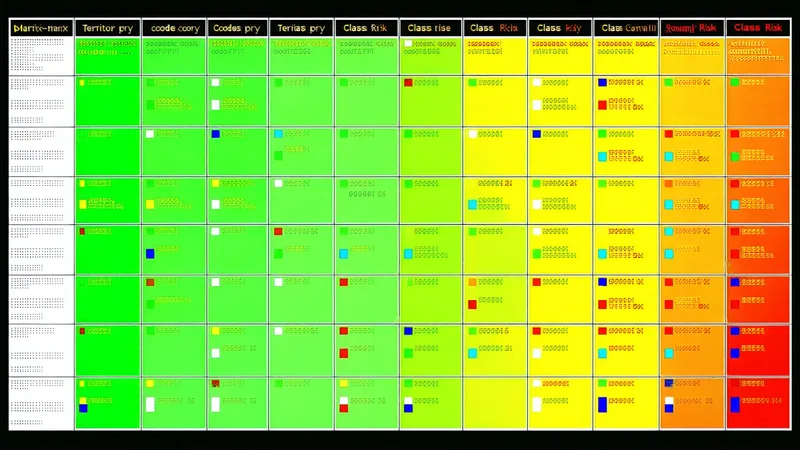
Commercial property is the focal point of the current hard market cycle, driven by consecutive years of elevated CAT losses and reinsurance market stress. Appetite tightening in commercial property has followed a consistent pattern across carriers with coastal, wind, and wildland-urban interface exposure:
TIV caps in CAT-exposed territories have moved down. Frame and Joisted Masonry construction classes, which are harder to reinsure and carry higher severity potential, are seeing tighter eligibility thresholds — lower TIV maximums, higher wind deductible requirements as a condition of coverage, and in some territories, outright exclusion for older Frame construction above a threshold age. ISO loss costs for commercial property have moved in most bureau-filed states, but rate adequacy varies by territory and construction class, and the carriers and MGAs that have maintained broad appetite in stressed territories are often not achieving adequate rate even with nominal rate increases.
The practical appetite tightening moves that make sense given current reinsurance and loss cost conditions: review Frame and Joisted Masonry TIV caps quarterly against treaty limits rather than annually; explicitly exclude risks with CAT zone accumulation conflicts rather than routing them to underwriter discretion; tighten business interruption coverage relative to building value for occupancies with high BI-to-property ratios (warehousing, cold storage, specialized manufacturing); and ensure that TRIA-eligible coverage elections are being appropriately priced relative to current terrorism risk insurance pricing, not left at legacy flat-rate endorsement terms.
GL Appetite Discipline in a Rising Casualty Market
GL rate increases in the commercial market have been more uneven than commercial property, with significant variation by class code and territory. Construction-related GL, habitational GL, and professional liability-adjacent GL classes have seen the most significant rate pressure; some commercial GL classes have seen only modest rate movement.
In a hardening casualty environment, the appetite discipline challenge is different from commercial property: the adverse selection risk isn't usually TIV-driven, it's class-code-driven. Classes that are experiencing rate increases are experiencing them because frequency and severity have elevated — and the accounts submitting in those classes often know their loss history is worse than average. Appetite rules that use ACORD 126 data more systematically (operations description validation against class code, payroll and receipts checks for reasonableness relative to class, loss history from LexisNexis C.L.U.E. Commercial) provide more selectivity within a class than a binary class-code filter alone.
We're not saying that class code exclusions aren't necessary — they are, for genuinely hazardous classes. But within eligible class codes, the within-class risk differentiation is where loss ratio improvement actually comes from in a mature casualty book. Broad class-code appetite combined with systematic in-class risk scoring produces better results than narrow class-code eligibility lists applied uniformly regardless of account quality.
A Scenario: Appetite Discipline Under Rate Pressure at a Northeast Regional Carrier
Consider a regional commercial carrier writing commercial property and GL in the Northeast, operating in a market where commercial property rates in coastal territories have increased substantially over the prior 18 months. The carrier's submission volume has increased as larger national carriers have exited or significantly restricted capacity in their territory — exactly the kind of submission flow increase that looks like opportunity but carries adverse selection risk.
The carrier's underwriting team begins seeing a higher proportion of coastal Frame-construction commercial property submissions — properties that had previously been declined or non-renewed by larger carriers. The TIV on these submissions is in the $1.5M-$3M range, and at current rates they look nominally adequate. But the loss history queries coming back from LexisNexis C.L.U.E. Commercial show that several of these accounts have prior claims that the submitting producer didn't disclose on the ACORD 140.
The appetite matrix tightening that matters here isn't just the TIV cap or the construction class rule — it's the loss history screening rule that catches the undisclosed prior claims before the risk is quoted. An automated completeness check that verifies loss history data is present and reconciles it against the submission's stated loss experience is the appetite enforcement mechanism that actually protects the carrier's loss ratio in this scenario, not a higher TIV cap that the adverse-selection accounts stay just under anyway.
Accumulation Management and Reinsurance Treaty Compliance
Hard market appetite discipline isn't just about individual risk selection — it's about aggregate accumulation. Carriers and MGAs with CAT-exposed commercial property books need to manage aggregate TIV by CAT zone against their reinsurance treaty limits, not just evaluate individual risks in isolation.
The practical question is: as you write more commercial property in a given CAT zone during a hard market, at what aggregate TIV does your treaty exhaustion create unretained exposure? That number should be tracked in real time, and the appetite matrix should incorporate a CAT zone capacity signal that tightens screening automatically as the aggregate approaches treaty-constrained limits — not after the limit is breached and new submissions have to be declined retroactively.
This is especially relevant for MGAs with binding authority from multiple capacity providers. If two capacity providers have overlapping geographic authority for commercial property, the aggregate TIV across both needs to be tracked against the combined capacity, not separately against each provider's individual limit. The carrier's excess-of-loss CAT treaty doesn't know which of your providers' capacity was used for a given risk; it knows the aggregate loss when the CAT event occurs.
The Rate-Adequacy Question in Appetite Decisions
Hard market appetite decisions ultimately need to be grounded in the rate adequacy question: at current rates and with current loss cost trends, is the premium adequate for the risk? The answer isn't the same for every class code, every territory, or every construction type — and an appetite matrix that treats all in-appetite risks as rate-adequate at current rates is making a modeling assumption that is probably not accurate for all segments of the book.
Connecting ISO loss cost data to appetite decisions — using current ISO loss costs by territory and class as a floor check on whether the premium quoted is actually adequate — provides a more rigorous basis for appetite decisions than rate change alone. An account where the ISO loss cost has increased faster than the carrier's rate change in that class is arguably under-priced even at the new "hard market" rate, and the appetite decision should reflect that, either through stricter risk selection in that class or through explicit rate modification.
Perilarc's appetite modeling supports hard-market tightening workflows — including CAT zone accumulation signals, per-territory TIV threshold adjustments, and rate adequacy checks against ISO loss cost benchmarks. If your team is reviewing commercial property or GL appetite in the current market, request a pilot review.