General liability underwriting carries an occupational hazard: the ACORD 126 form arrives with a class code assigned by the producer, an operations description that may or may not match that class code, and payroll or receipts figures that may or may not reflect the actual scope of operations. Carriers that accept those three inputs at face value and apply their appetite rules accordingly are making decisions based on data they haven't validated — and the inconsistency shows up in loss ratios when the bound risk turns out to be doing something different than what was described.
This piece covers a structured approach to GL appetite refinement using ACORD 126 data: how to validate class code assignments against operations descriptions, how payroll and receipts checks work as reasonableness filters, and how systematic analysis of submission history can reveal appetite rules that aren't serving their intended purpose.
The Class Code Validation Problem in Commercial GL
ISO GL class codes are the foundation of commercial GL rating and appetite screening. The CGL (Commercial General Liability) manual contains thousands of class codes, each with a specific scope of operations description, an applicable rate basis, and a rating factor that reflects the loss cost for that class. But class codes are assigned by producers, not by the carrier's rating system — and producers assign class codes based on what they know about the insured, which isn't always what the ISO manual description actually covers.
The most frequent class code assignment issues in commercial GL submissions fall into three patterns. First, a broader code used when a more specific code exists: an insured doing commercial janitorial services gets ACORD 126 submitted under a general building services code rather than the specific janitorial class, which has a different rate and different appetite implications. Second, a code that understates the hazard: a contractor doing renovation work (higher hazard) submitted under a general construction class code that encompasses less hazardous operations. Third, a code that doesn't reflect a secondary operation: an insured that operates a retail store (primary class coded correctly) but also delivers merchandise to customers (creating auto-liability spillover that requires a separate endorsement or separate policy).
Each of these pattern types has appetite implications. The broader-code issue means the rate basis may be wrong (lower rate than the specific class would generate). The understate-hazard issue means the risk may be outside appetite at the correct class code. The secondary-operation issue means the coverage scope may not match the actual exposure.
Using ACORD 126 Data for Operations Description Validation
ACORD 126 Section I captures the insured's description of operations — a free-text field that describes what the business actually does. This description is an underused resource for appetite screening. A systematic check that compares the operations description against the assigned ISO class code — flagging submissions where the description doesn't match the code's ISO manual scope — catches class code assignment errors before they become rating errors.
The validation doesn't require sophisticated natural language processing. A set of keyword-to-class-code mappings, built from the ISO manual's description language for each code in your appetite matrix, produces a reasonable first-pass check. Operations descriptions that mention "roofing," "excavation," or "demolition" on a submission filed under a general contractor class code should trigger a review — those operations have specific higher-hazard class codes in the ISO manual, and the submission may be incorrectly classified.
ACORD 126 also captures the premises description (Section I, premises information), which provides a cross-check on the operations description. An operations description that claims the insured is a retail florist but a premises description showing an industrial warehouse should prompt a completeness inquiry. Mismatches between operations description and premises type are a reasonable proxy for class code inaccuracy at the submission level.
Payroll and Receipts as Reasonableness Filters
ISO GL rating uses either payroll or gross receipts as the rate basis depending on the class code — payroll for labor-intensive operations (contractors, some services), receipts for sales-based operations (retail, wholesale, restaurants). The rate basis field on ACORD 126 is a critical input for both appetite screening and rating accuracy.
Payroll figures that are implausibly low relative to the described operations are a common accuracy issue. A landscaping contractor listing $75,000 annual payroll for "15 employees" is describing a payroll figure that implies roughly $5,000 per employee — about one-fifth of prevailing wages for landscaping labor. That figure either reflects unreported payroll, partial-year exposure being submitted as full-year, or a misunderstanding of what "payroll" means in the ISO rating context (some insureds report W-2 wages rather than total compensation including benefits).
We're not saying that payroll discrepancies are always intentional misrepresentation — they often aren't. The source is frequently a producer who didn't explain the ISO payroll definition clearly, or an insured who provided prior-year payroll without adjusting for current-year growth. But the screening implication is the same regardless of intent: a submission with implausible payroll figures needs a completeness inquiry before the risk is rated, because the rated premium will be materially wrong if the basis is wrong.
Reasonableness benchmarks for payroll by class code — derived from ISO industry data or from the carrier's own submission history — provide a systematic basis for flagging outliers without requiring manual judgment on every submission. A submission where payroll per employee falls more than two standard deviations below the class code's historical distribution should generate a data quality flag, not an automatic decline.
A Scenario: GL Appetite Refinement Using Submission History Analysis
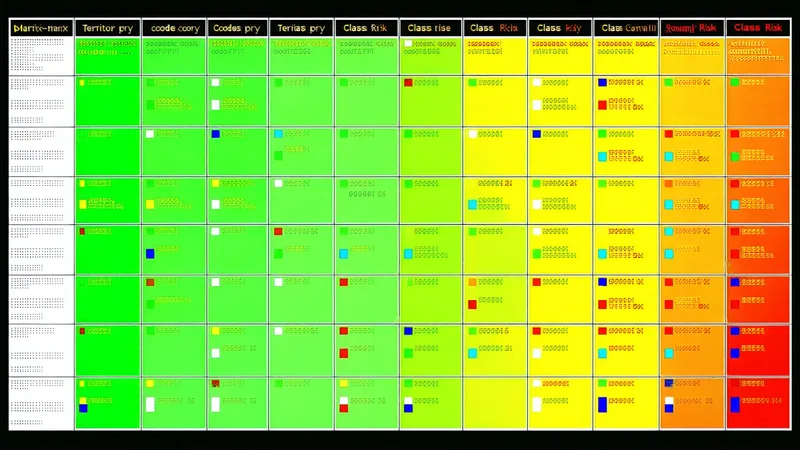
Consider a commercial carrier writing GL across a range of contractor and light industrial classes in the Northeast. The carrier's appetite matrix lists acceptable and excluded ISO GL class codes, updated annually by the commercial underwriting team based on loss experience. The matrix has been refined over several years but has never been systematically analyzed against actual submission and loss history to validate whether the rules are producing the intended outcomes.
A submission history analysis covering three policy years reveals the following pattern: submissions in ISO class 91577 (Carpentry — interior only, residential) are binding at a rate well above average and generating loss ratios well above the carrier's target. The class isn't excluded in the appetite matrix; it's listed as "in-appetite, standard." But the loss history shows that a significant portion of the claims in this class involved exterior carpentry or commercial work — operations that should have been written under different class codes with higher rates and higher scrutiny.
The refinement approach isn't to exclude the class — interior residential carpentry is a legitimate appetite class. It's to add an operations description check that flags submissions under 91577 where the operations description includes any exterior or commercial language, routing those to underwriter review rather than auto-referring at the standard threshold. The underlying issue is class code accuracy, not class code eligibility.
Products Liability and Completed Operations Exposure
Commercial GL policies written on an ACORD 126 submission almost always include products/completed operations (PC&O) coverage as a component of the CGL form. The PC&O exposure is often different from the premises/operations exposure, and the appetite implications are different as well.
For manufacturing and distribution accounts, PC&O is frequently the dominant GL exposure — the products manufactured or distributed are the primary liability risk, not the premises operations. ISO GL class codes for manufacturers and distributors have separate PC&O rates and separate appetite considerations. An appetite matrix that treats the entire submission under the premises operations class code without considering the PC&O exposure profile is underweighting the primary risk.
ACORD 126 Section III captures products/completed operations data: annual sales, description of products, nature of completed operations. This data should flow into the GL risk score alongside the premises class code information, not be treated as supplemental detail that underwriters review only when they're concerned about a specific account.
Systematic Appetite Refinement vs. Individual Risk Judgment
Individual GL underwriting judgment — the underwriter's read of whether a specific account's operations match the class code and whether the payroll figures are plausible — is necessary but not sufficient for maintaining a well-calibrated GL book. Individual judgment works well for accounts that look different from the norm. It doesn't systematically surface patterns in the book where appetite rules are generating unexpected outcomes across many accounts.
Systematic analysis of submission history — tracking class code accuracy rates, payroll reasonableness distributions, and bound account loss outcomes by class code segment — provides the signal that individual judgment can't. When a class code segment shows a loss ratio pattern that differs materially from the ISO benchmark, the question is whether the ISO benchmark is wrong, whether the underwriting has been selecting better or worse than average within the class, or whether the class code is being applied to operations that don't belong in it. That analysis requires submission-level data, not individual account review.
Appetite refinement cycles that incorporate submission history analysis — quarterly at minimum for active books, semi-annually for smaller books — produce materially better appetite calibration than annual reviews based on intuition and aggregate loss summaries.
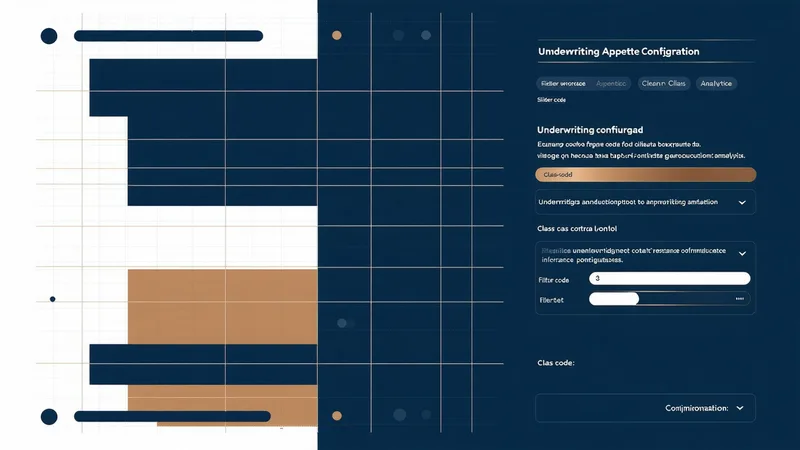
Perilarc's GL appetite configuration supports ACORD 126 field validation, class code accuracy checks against operations descriptions, and systematic submission history analysis for appetite refinement. To see how that applies to your commercial GL book, request a pilot review.