Submission triage is where underwriting economics get determined. The question isn't just which submissions get quoted — it's how much underwriter time is consumed before the routing decision is made. In a commercial lines operation handling several hundred submissions a week, the difference between a poorly-calibrated triage system and a well-configured one can be measured in underwriter hours per account, and that compounds across the book.
The routing thresholds — the specific score cutoffs and rule conditions that determine whether a submission is auto-declined, auto-referred to an underwriter, or queued for manual review — are configuration decisions, not product defaults. Getting them right requires understanding your own appetite rules, your loss history, and what you're actually optimizing for when you route a submission.
The Three Routing Outputs and What They Represent
A commercial lines submission triage system produces three meaningful outputs: auto-decline, auto-refer, and manual queue. Each represents a different risk/efficiency tradeoff, and calibrating the thresholds that separate them is where most of the configuration work happens.
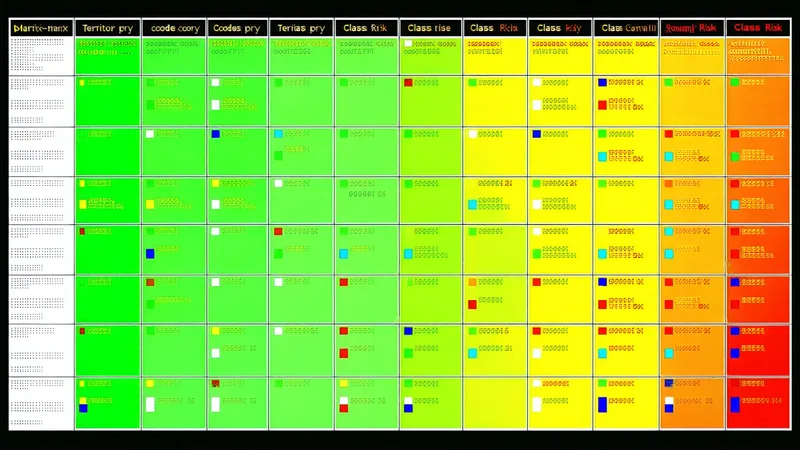
Auto-decline is the simplest case: submissions that fail a hard rule get declined without underwriter review. Hard rules are absolute appetite disqualifiers — ISO class codes on the prohibited list, TIV above the carrier's per-risk authority, states where the carrier isn't licensed. These aren't scoring questions; they're binary filters based on appetite matrix rules. The key configuration question for auto-decline is completeness: a submission that's missing critical fields (construction class, occupancy, TIV) can't be reliably screened, so the system needs to handle the completeness-check-fail case separately from the clean-fail case.
Auto-refer is the more nuanced output: submissions that pass all hard-rule filters and score above the referral threshold get routed to an underwriter queue without needing a manual pre-screen. This is where the risk scoring model does most of its work, and where the calibration of the referral threshold has the most significant impact on queue load and loss ratio.
Manual queue — submissions that score in the borderline range, or that trigger a soft flag (borderline TIV, borderline class code, incomplete but not disqualifying data) — represents the triage system's hedge: situations where the scoring model doesn't have enough signal to route with confidence. The goal over time is to shrink the manual queue by improving the appetite rules and the scoring model, not to eliminate it entirely.
Calibrating the Auto-Refer Threshold
The auto-refer threshold is the highest-leverage configuration decision in the triage system. Set it too high (too conservative about auto-referring), and underwriters are reviewing too many submissions that are clearly in-appetite and low-risk — the queue is clean but expensive. Set it too low (too aggressive about auto-referring), and submissions get quoted that shouldn't, degrading the loss ratio and undermining the point of the triage system.
Calibration should start from a retrospective analysis of your submission history: for submissions that were quoted and bound, what was the distribution of outcomes? For submissions that were declined, what signals were present at submission time that predicted the decline? This doesn't require a formal actuarial study — even a rough correlation analysis between available submission fields (construction class, ISO code, TIV, loss history from LexisNexis C.L.U.E. Commercial) and ultimate quote-bind-lose outcomes gives you enough signal to set initial thresholds that are meaningfully better than judgment.
From there, the threshold should be reviewed quarterly against actual routing outcomes. If auto-referred submissions are binding at a rate well above the carrier's target hit ratio for that line, the threshold may be too permissive and should move up. If auto-declined submissions are drawing producer pushback for accounts that look like they should qualify, the hard rules or the completeness threshold may be misconfigured.
Per-Line-of-Business Thresholds
A single global triage threshold across commercial lines is almost always wrong. Commercial property and commercial auto have materially different loss frequency and severity profiles, different data signal availability at submission, and different appetite rule structures. What constitutes a "good" commercial property submission (complete ACORD 140, ISO construction class, current TIV, no losses on LexisNexis C.L.U.E. Commercial in the past three years) is a different checklist than what constitutes a "good" GL submission (complete ACORD 126, correct ISO liability class code, operations description that matches the class code, no professional liability exposure spilling into a GL-only submission).
Separate routing thresholds by line of business at minimum. In a multi-line commercial submission, where a single account may include GL (ACORD 126), commercial property (ACORD 140), and commercial auto, the triage logic needs to handle each coverage component against the relevant line's threshold and aggregate the results into a single routing decision — typically routing to the most conservative outcome among the components.
A Scenario: Threshold Recalibration After a Hard Market Shift
Consider a commercial lines MGA writing primarily commercial property and GL across the Southeast, with binding authority from a panel of carriers. Following a difficult 2024 CAT season, one of the carriers tightened its commercial property appetite in coastal Florida — raising the minimum construction class threshold from Non-Combustible to Modified Fire Resistive for locations within 10 miles of the coast and reducing the maximum TIV for Frame construction to $750K from $2M in four counties.
The MGA's existing triage configuration had a single commercial property referral threshold and no coastal zone overlay. Submissions from coastal Florida locations had been auto-referred if they passed the basic class code and TIV filters — but the updated carrier appetite required tighter screening that the existing configuration couldn't express.
The recalibration involved adding a coastal zone flag driven by the county-level data in ACORD 140, overlaying that flag with a construction class check (Modified Fire Resistive required in coastal zone), and setting the TIV threshold for Frame construction separately for coastal vs. inland. The recalibration took a week of configuration work, not a system change — but it would have been faster if the triage system had been built with configurable per-zone thresholds from the start rather than a single global property threshold.
Completeness Scoring and Its Role in Routing
We're not saying that a low completeness score should automatically route to decline — it shouldn't. An ACORD 125 submission that's missing some supplemental fields is not the same as an out-of-appetite submission. But completeness does need to be factored into routing, because the risk score is only as reliable as the data it's built on.
A practical approach is to treat completeness as a routing modifier rather than a primary threshold. A submission that scores well on available signals but is missing the loss history query (LexisNexis C.L.U.E. Commercial hasn't returned yet, or the submission didn't include enough entity data to run it) should route to a "conditional refer" state — it's in-appetite and looks good, but underwriter should confirm the loss history before binding. A submission that's missing the construction class entirely should route to a "data request" state before scoring runs at all, because the construction class is a non-optional input for commercial property risk scoring.
The completeness threshold for running the risk score at all should be documented explicitly — which fields are required, which fields are conditionally required by line of business, and what happens when a required field is absent. That documentation is the config that drives automated completeness checking at ACORD ingestion.
Queue Management and SLA Tracking
Even a well-calibrated triage system produces a manual queue — submissions that need underwriter attention. Managing that queue so that it doesn't become a bottleneck requires SLA tracking: for each routing output, how long can a submission sit before it requires action?
Commercial lines submission SLAs are set partly by producer expectations (most producers expect a response within 24-48 hours for standard commercial lines) and partly by binding authority constraints (MGAs often have carrier-imposed response time requirements in their DUA). The triage system's queue management should surface submissions approaching SLA breach before they breach, not after.
Queue depth — the number of submissions in each routing state at any given time — is a useful leading indicator of underwriting capacity stress. A growing manual queue at the expense of clearly in-appetite submissions suggests the auto-refer threshold may be misconfigured; a shrinking auto-refer queue with degrading hit ratio suggests the threshold may be too aggressive.
Threshold Review Cadence
Triage thresholds aren't set-and-forget configuration. Market conditions, reinsurance treaty changes, and loss experience all affect what the right threshold should be. A quarterly review cycle that looks at auto-refer hit ratios, manual queue conversion rates, and auto-decline appeal rates gives enough signal to make meaningful threshold adjustments without creating operational churn from constant recalibration.
The review should be driven by data, not intuition. If the auto-refer rate for commercial property in a specific territory has increased 15% quarter-over-quarter without a corresponding increase in submission volume, something changed — either the appetite matrix tightened, a scoring signal shifted, or producers are submitting a different risk profile. Understanding the cause before adjusting the threshold prevents miscalibration in the other direction.
Perilarc's submission triage configuration supports per-line-of-business thresholds, completeness scoring, and CAT zone overlays — configurable against your current appetite matrix without requiring a system change. Request a pilot review to walk through threshold calibration for your commercial lines book.